I was in my late twenties and had met a group of locals while visiting a neighborhood bar. It was a Tuesday, sometime around two in the afternoon, and they opened a bottle of Champagne as casually as if they were pouring water. There was no birthday, wedding, promotion or special occasion. We drank Champagne, ate potato chips, talked, laughed and let the afternoon unfold. At some point, my new friends decided they were going to teach me Spanish, which mostly resulted in a lot more laughing than actual learning. I can still picture that table, the bottle between us, the chips being passed around and all of us trying to understand one another. It was simple, spontaneous and completely unforgettable.
It wasn’t simply the bubbles. It was everything the bottle opened up around it: new friendships, stories, laughter and time that suddenly seemed to move differently. I still think about that afternoon.
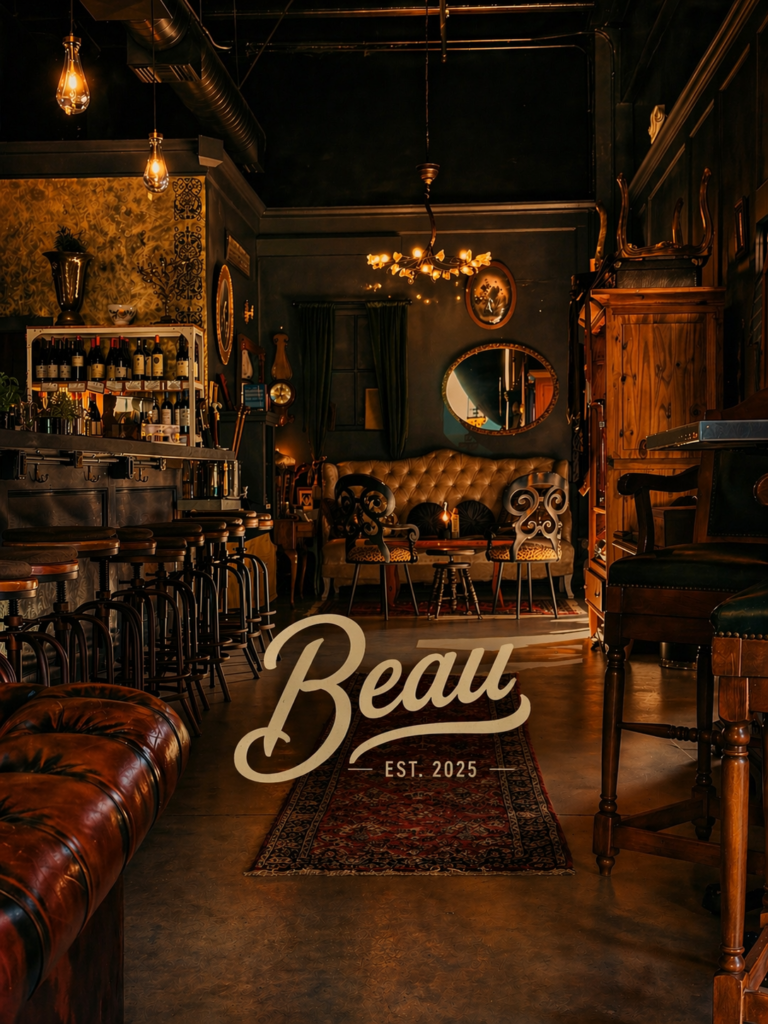
The House of Beau is officially the sixth bar I have opened, and every hospitality concept I create comes back to that same idea. I don’t simply want to build a place that serves drinks. I want to tell a story, share a story and create a place where other people can make stories of their own.
Travel taught me something about hospitality. In other cultures, people seem to understand how to slow down, sit, talk and allow an afternoon to become something. In America, we rush. We race. We save the good bottle for someday.
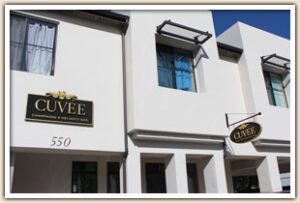
I’ve always tried to sneak a little of that European sensibility into the spaces I create. Sit down. Stay awhile. Order the good thing. Talk to the stranger beside you. Let Tuesday afternoon be enough of a reason. That philosophy started for me over Champagne and potato chips in Madrid, followed me into Cuvée in Avila Beach, and eventually found its way to Beau. And perhaps that’s fitting, because Champagne itself has always been about much more than what is inside the bottle.
Long before anyone raised a coupe at midnight, Champagne was mostly still wine made in a cold and difficult region of northern France. Reims became connected with French royalty after the baptism of Clovis there in 496, and for centuries wines from Champagne were served around the coronations of French kings. The bubbles came later, and initially they weren’t necessarily welcome. Cold winters could stop fermentation, only for it to restart when temperatures warmed. If that happened after the wine had been bottled, carbon dioxide became trapped inside.
Bubbles. Sometimes followed by exploding bottles. One bottle breaking could trigger another, then another. Champagne was once considerably more dangerous than anything we associate with celebration today. And despite the wonderful story that Dom Pierre Pérignon supposedly tasted sparkling wine and proclaimed, “Come quickly, I am tasting the stars,” he did not simply invent Champagne.
What Dom Pérignon did in the late 1600s was help elevate grape selection, blending and winemaking. Over generations, stronger bottles, cork closures and better control of fermentation turned unpredictable bubbles into the Champagne we know today. Then along came one of my favorite characters in its history.
In 1805, Barbe-Nicole Clicquot became a widow at only 27 and took control of her family’s Champagne business at a time when women had very little economic power.
Early Champagne could be cloudy because sediment remained inside the bottle. In 1816, Madame Clicquot helped develop the riddling table, allowing bottles to be gradually turned until sediment collected near the neck and could be removed. Champagne became brilliantly clear. She also produced an early vintage Champagne and, in 1818, what is considered the first known blended rosé Champagne made by adding red wine.
Her name remains on bottles today: Veuve Clicquot. “Veuve,” appropriately enough, means widow. By the nineteenth century, Champagne had become theater. Royal courts wanted it. Aristocrats wanted it. Eventually everyone wanted whatever the aristocrats were drinking.
In 1876, Tsar Alexander II of Russia asked Louis Roederer to create something extraordinary specifically for him. The result was Cristal. Its famous transparent, flat-bottomed bottle distinguished it from other Champagnes, and the unusual design has long been associated with security concerns at the imperial court. Imagine commissioning your own Champagne and having people still drinking it nearly 150 years later. That’s quite a house pour.
This may be what fascinates me most, great Champagne doesn’t simply taste like grapes. As it spends years resting with yeast inside cool, dark cellars, many carved deep into Champagne’s famous chalk, the wine develops extraordinary aromas and flavors. Brioche. Toasted almonds. Pastry. Hazelnut. Lemon peel. Apples. Chalk. A bottle can sit quietly in darkness for years, appearing to do absolutely nothing, and yet everything is changing. When you open great Champagne, in some ways you are opening time.
There can never be one completely objective “greatest Champagne,” but certain wines have become mythical.
Krug 1928 is one of them. Collectors and critics have regarded it as one of Champagne’s historic masterpieces, and surviving bottles today are essentially museum pieces. Then there are the prestige wines that Champagne lovers eventually encounter as they fall deeper down the rabbit hole: Krug Vintage, Krug Grande Cuvée, Krug Clos du Mesnil, Salon, Dom Pérignon, Louis Roederer Cristal, Bollinger R.D., Bollinger Vieilles Vignes Françaises, Pol Roger Cuvée Sir Winston Churchill, Taittinger Comtes de Champagne and Philipponnat Clos des Goisses. Among more recent vintages, Cristal 2008 has become especially admired for its brightness and aging potential.
These bottles can be magnificent. They can also cost hundreds or thousands of dollars. Fortunately, Champagne becomes very interesting long before you reach those prices.
One of the things I love most about Champagne is that price and pleasure are not always the same thing. Yes, there are extraordinary bottles that cost hundreds or even thousands of dollars. But some of the most interesting Champagne experiences happen when you stop shopping by label and start paying attention to style, place and producer.
A beautiful bottle does not have to be the most famous bottle in the room. Sometimes the real discovery is a smaller house, a grower Champagne, a Premier Cru village you have never heard of, or a bottle the person at the wine shop cannot stop talking about. That is where Champagne gets fun. Instead of asking, “What is the best Champagne?” I think it is far more interesting to ask, “What kind of Champagne do I love?” Do you love something bright, crisp and chalky? You may gravitate toward Blanc de Blancs and Chardonnay-driven wines. Do you prefer something richer, toastier and more substantial? Look toward Pinot Noir-heavy Champagne, longer aging and wines with more reserve character. Do you love brioche, hazelnut and pastry? Or lemon, green apple and minerality? Do you want elegant and precise, or broad and generous?
Those questions tell you far more than a famous label ever will.
My biggest rule is simple: stay curious.
Ask questions. Try producers you have never heard of. Taste two bottles side by side. Notice what changes. One might feel creamy, another almost razor sharp. One may smell like pastry, another like citrus peel, chalk or toasted nuts. That is how you begin learning Champagne. Not by memorizing names, by tasting differences. And if someone handed me $200 and said, “Teach me Champagne,” I still would not spend it all on one bottle. I would choose several very different styles and open them together, because Champagne becomes far more interesting when you compare it. Suddenly you notice structure, texture, richness, acidity and aroma in ways you never would from drinking one bottle alone. That kind of tasting teaches you more than price ever could.
And, perhaps more importantly, it turns Champagne back into what I think it should be in the first place:
A discovery.
A conversation.
A reason to gather around a table and say, “Try this.”
We have somehow decided Champagne should appear only when someone gets married, engaged, promoted or when the clock strikes midnight on December 31. I think that completely misunderstands Champagne. Champagne is one of the greatest food wines in the world. Drink it with fried chicken, potato chips, French fries, Parmesan, triple-cream cheese, oysters, popcorn, eggs, buttered toast or roast chicken. The acidity cuts through richness. The bubbles refresh your palate. Salt makes everything better, and frankly, a cold glass of Champagne alongside a bowl of potato chips at 4:30 in the afternoon can be considerably more civilized than drinking it beneath a chandelier at midnight.
Maybe that’s why Madrid stayed with me. Those locals already understood something I was only beginning to learn. Champagne doesn’t need an occasion. Champagne can create the occasion. That Tuesday afternoon wasn’t memorable because something extraordinary had been scheduled. It became extraordinary because we stopped long enough to enjoy it.
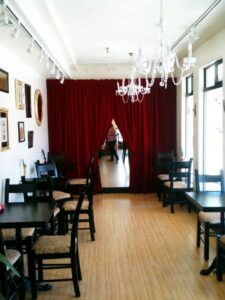
Cuvée was my first bar. Beau is my sixth. There have been a lot of rooms, a lot of glasses poured and a lot of stories in between, but the philosophy hasn’t changed very much. Create a beautiful place. Put interesting people inside it. Give them something wonderful to drink. Turn on the music. And give everyone enough time to discover one another. Because the best nights aren’t necessarily the ones we planned. Sometimes they begin because somebody says, “Should we open a bottle?”
For hundreds of years Champagne has survived wars, revolutions, vineyard devastation, exploding bottles, economic collapse and changing empires. A young widow helped transform it. Monks refined its wines. Merchants carried it across Europe. Tsars commissioned it. Kings drank it, and somehow we reduced it to something we’re supposed to save.
Open the bottle because dinner turned out beautifully. Because an old friend stopped by. Because business was difficult this week and you’re still standing. Because business was wonderful this week. Because the music is good. Because you’re sitting around a table with someone you love. Because you met some strangers in a bar and they invited you to sit down. Open it alongside a bowl of potato chips at two o’clock in the afternoon, or simply open it because it’s Tuesday.
I learned that one in Madrid. All these years later, I still think they had it exactly right.
This holiday season at The House of Beau, we’re putting that philosophy into practice with something we’re calling The Twelve Bottles of Christmas.
Beginning Sunday, December 13, and continuing through Christmas Eve, December 24, we’ll open a different bottle of Champagne each day and share it with the house. We’ll set a family-style table and invite friends, regulars, strangers and whoever happens to wander through the door to sit together, raise a glass, share a story and perhaps meet someone they never would have met otherwise.
This won’t be about a formal tasting or knowing the “right” thing to say about wine. It will be about what Champagne has always meant to me: slowing down, gathering around a table and sharing something beautiful with other people. In other words, a little bit of Madrid on a Tuesday afternoon, right here at Beau.
And on December 24, we’ll bring it all home. Christmas Eve will be your day to pick up a favorite bottle—or a case—to take with you and share with friends, family, neighbors, and maybe even a stranger or two. Because if there is one thing Champagne has taught me, it is that the best bottles are rarely the ones we keep to ourselves.
I have a feeling this one may become a tradition.
Starr
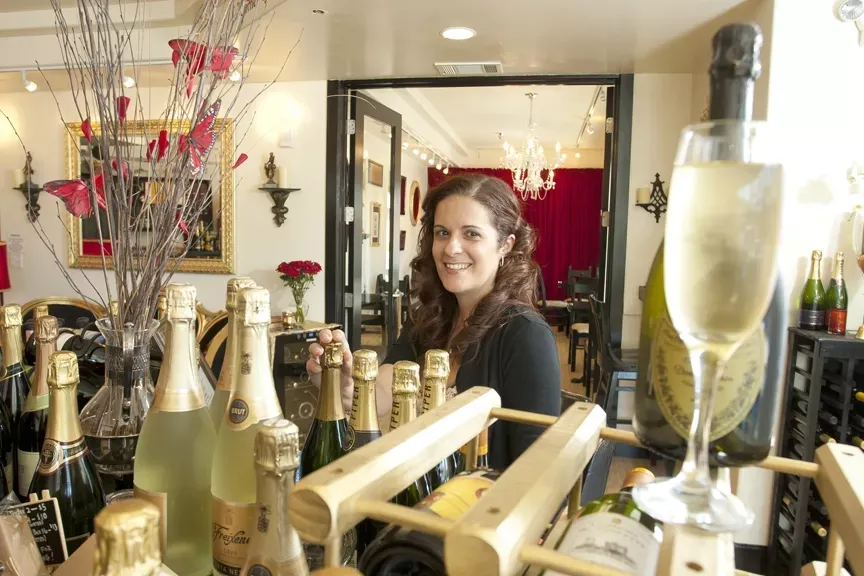
Cuvée in Avila Beach: Where my Champagne story first became a place- my first bar, more than 100 bubbles on the list, and the beginning of a hospitality journey that eventually led me to Beau.